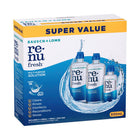
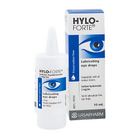
Standard complete-glasses pricing stays: your usual frame allowance comes off first, then BFSALE applies.
Full offer terms
Use BFSALE online from 20 November 2026 at 12:00am until 30 November 2026 at 11:59pm AEDT (Sydney time). No minimum spend. One-time purchases only. Excludes subscriptions, gift cards, shipping, Transit Protection and prism surcharges. Cannot combine with other promotions, newsletter codes or price-match/price-beat offers.
Eyewear and glasses-care accessories receive 15%; contact-lens cases receive 2%. Lens Replacement pairs are ranked by lens price, highest first, and each pair receives one discount. The standard complete-glasses frame allowance is retained before BFSALE.
Free-shipping eligibility is calculated after discounts. Check the shipping price and delivery estimate at checkout. Prescription and frame suitability requirements and standard service/returns terms apply. Subscription and new-patient newsletter offers are unchanged.
Our price$53.99RRPRecommended retail price$104.0048% OFF48% off RRP
Estimate contact lens starting powers from your glasses prescription, or compare toric and spherical options using your current contact lens prescription.
If you already wear toric contact lenses, you can also estimate the spherical equivalent and explore available lens options.
Enter one or both eyes. Use the sphere, cylinder and axis exactly as written on your current glasses prescription.
Example prescriptionSPH −4.00 · CYL −1.00 · Axis 180
Estimated starting-power results
Important: These are educational starting estimates, not contact lens prescriptions.
Why glasses and contact lens prescriptions differ
Glasses sit in front of the eyes; contact lenses sit at the corneal plane. At stronger powers, this distance changes the effective lens power. For glasses prescriptions, the calculator therefore applies vertex conversion after first estimating spherical equivalent where cylinder is present.
What is vertex distance?
Vertex distance is the space between a spectacle lens and the eye. This tool assumes 12 mm. Your actual fitting distance can differ, so the result remains a starting estimate.
What if I have astigmatism?
Spherical equivalent combines sphere with half the cylinder into one estimated spherical power. Because a spherical lens does not correct cylinder, clarity may reduce as astigmatism increases. Toric lenses correct sphere and cylinder but must still be assessed for rotation and fit.
Can I order coloured contacts if I have astigmatism?
Many coloured lenses are spherical only. Whether uncorrected cylinder provides acceptable visual clarity varies by wearer. Product matching uses exact orderable sphere values when available, or clearly labelled published-range data when exact values are unavailable. It does not assess fit or guarantee equivalent vision.
Do I need a contact lens fitting?
Yes, especially for new wearers or a change of lens design. A fitting assesses base curve, diameter, movement, comfort, material and corneal health—factors a spectacle-power calculation cannot assess.
Glasses prescription vs contact lens prescription
A glasses prescription lists spectacle powers. A contact lens prescription can also specify the lens design, material, base curve and diameter. This converter cannot determine those fitting details.
Frequently asked questions
Can I convert my glasses prescription to contact lenses?
You can mathematically estimate a starting contact lens power, but an optometrist must confirm the contact lens prescription and fit.
Why is my contact lens power different from my glasses power?
Contact lenses sit on the eye while glasses sit several millimetres away. Vertex distance can change the effective power, particularly at stronger prescriptions.
What vertex distance does this calculator use?
It uses a configurable 12 mm back vertex distance.
Can I wear spherical contact lenses if I have astigmatism?
Sometimes, particularly at lower cylinder values, but omitting cylinder can reduce clarity. The calculator explains the level without guaranteeing vision.
What is spherical equivalent?
Spherical equivalent is sphere plus half the cylinder. It estimates one spherical power when cylinder correction is omitted.
Do I need toric contact lenses?
Toric lenses preserve cylinder correction and are the shopping pathway shown when astigmatism is significant. An optometrist can assess lens rotation, fit and vision to determine the final prescription.
Can I use this calculator to order coloured contact lenses?
Use it only as an educational starting estimate. It does not confirm fit or expected visual clarity for a coloured lens, and it will not automatically populate an order.
Do I still need a contact lens fitting?
Yes. A fitting assesses eye health, comfort, movement, base curve, diameter, material and the performance of the actual lens on your eye.
Can I convert a toric contact lens prescription to a spherical contact lens power?
You can calculate its spherical equivalent by adding half the cylinder to the sphere. This removes the cylinder correction and does not guarantee the same vision through a spherical lens.
Do I need vertex conversion if I already wear contact lenses?
No. A current contact lens prescription is already at the corneal plane, so this calculator does not apply vertex-distance conversion in contact lens mode.
What is the spherical equivalent of a toric contact lens prescription?
It is the sphere plus half the cylinder, rounded here to the nearest 0.25 dioptre. It is an educational estimate, not a replacement prescription.
Will a spherical contact lens give the same vision as my toric lens?
Not necessarily. A spherical lens omits the cylinder correction, so clarity may reduce, particularly as astigmatism increases.
MENU
Choosing a selection results in a full page refresh.